
02
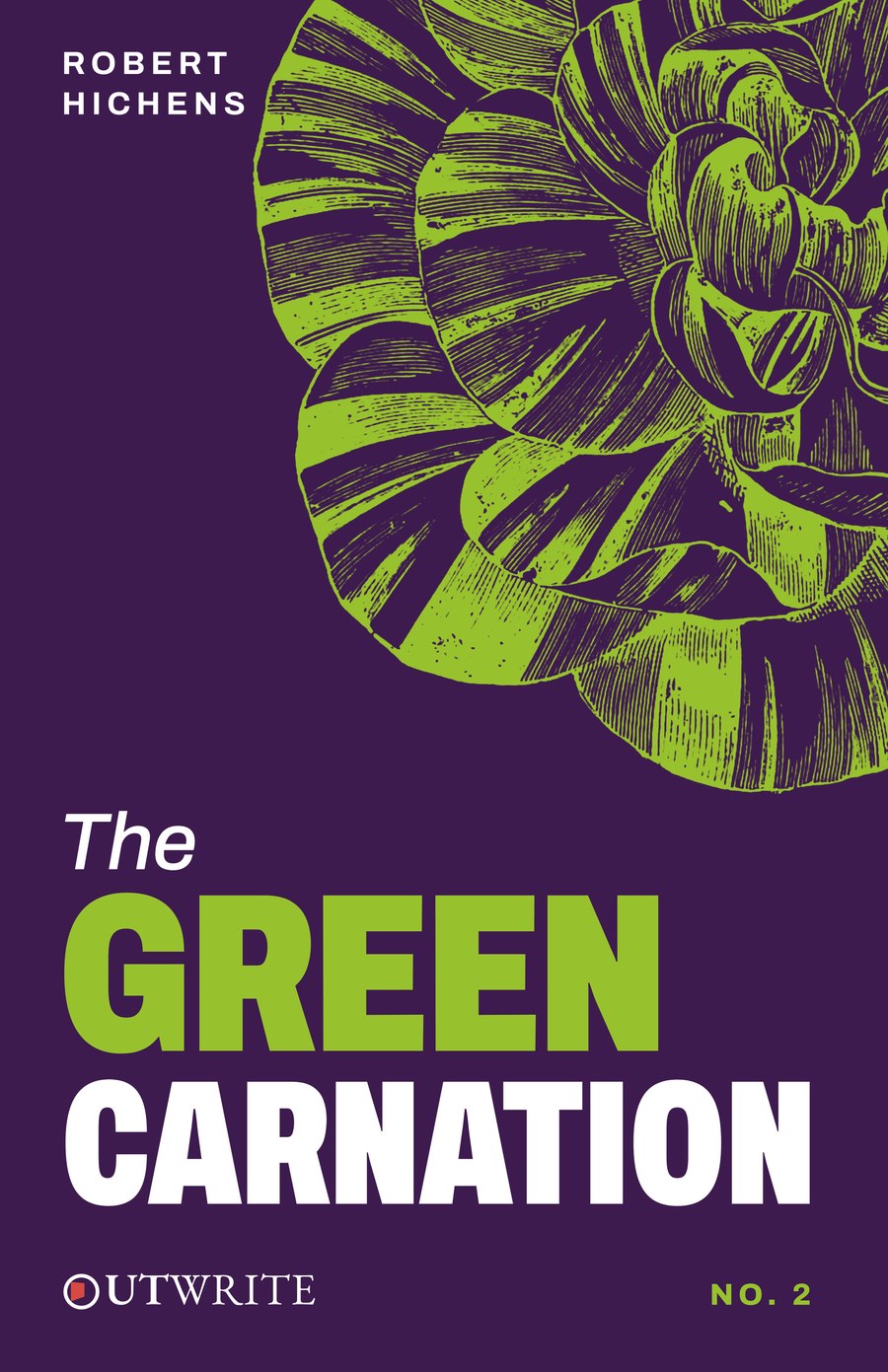
The Green
Carnation
An anonymous novel that skewered Oscar Wilde and Lord Alfred Douglas, written by a man who shared their secret. Within seven months of publication, Wilde was arrested.
- PaperbackComing soon
- EbookComing soon
- Hear when it’s out→
- Read the first pages↓
Join the letter and we’ll write once, when it’s ready to order.
- Author
- Robert Hichens
- First published
- London, 1894
- Editor
- Tomas Figueroa
- Length
- 248 pages
- Reading time
- About 4 hours
- Edition
- Modern Edition No. 2
Who reads this book
- Anyone who loved Saltburn or Alan Hollinghurst’s The Line of Beauty: beautiful young men, money, and a secret everyone can see
- Readers of The Picture of Dorian Gray and The Importance of Being Earnest
- Anyone following the story of Oscar Wilde, Lord Alfred Douglas, and the trials of 1895
- Readers of Love’s Coming-of-Age, OutWrite’s first Modern Edition
- Anyone who loves satire, epigram, and the London of the 1890s
- Book clubs and reading groups
About the book
A book with no name on it
In September 1894 the London publisher William Heinemann brought out a short novel with no author’s name on the title page. Its two figures were a middle-aged playwright of ruinous wit and a beautiful, idle young lord, and nobody in literary London needed more than a page to recognize Oscar Wilde and Lord Alfred Douglas, or to see what they were to each other. Twelve days later the Pall Mall Gazette named Wilde as the author too, and Wilde wrote to the paper to deny it.
The author was Robert Hichens, and he was twenty-nine. He had spent the previous winter on the Nile with Douglas and his friends, and the book is built out of talk he heard there and in London afterwards. Hichens was homosexual himself. He was mocking two men for a way of living that could have sent him to prison too.
The book was set in type twice in 1894, in London and in New York, and the two do not read alike: the New York setting names the wrong writer twice. This edition is set from the original London text.
“Nothing that is beautiful can possibly be wrong.”
Lord Reggie · Chapter VI
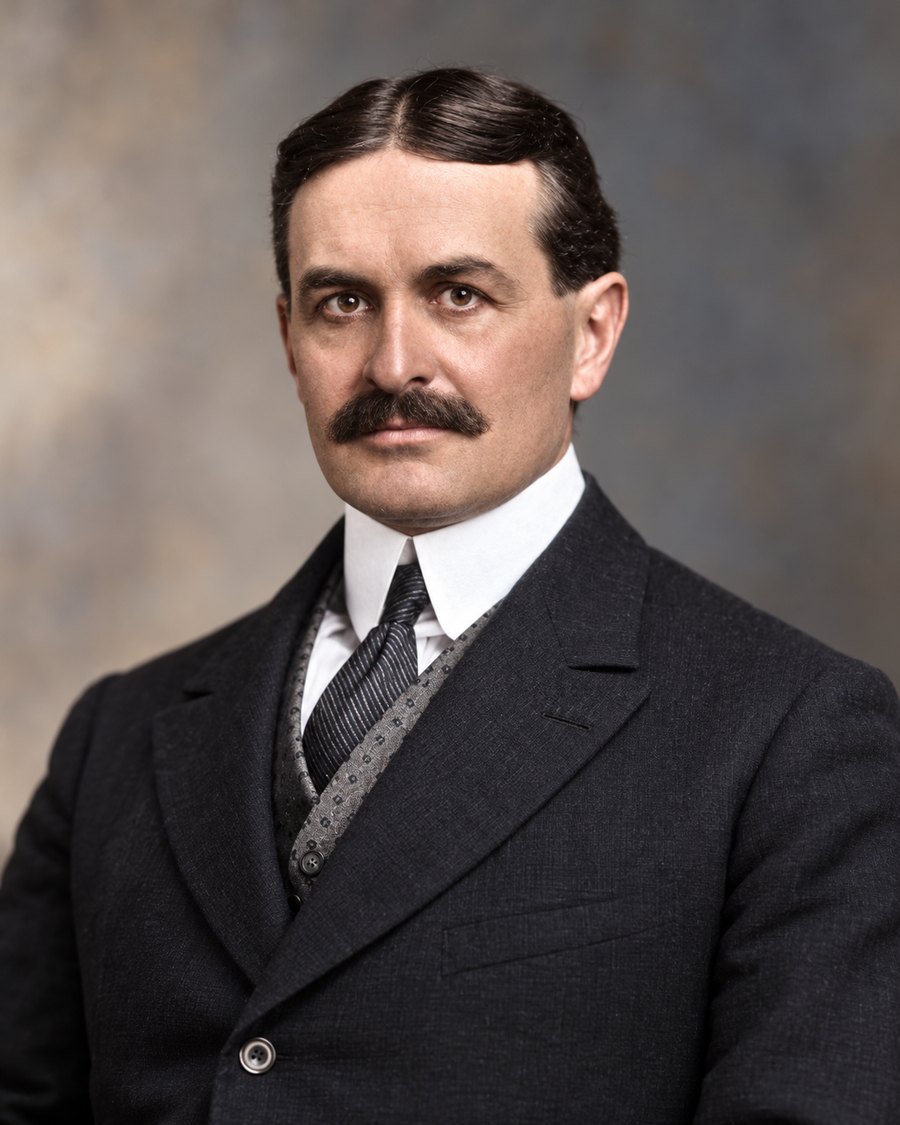
About the author
Read the first pages
Chapter I
The opening of the novel, page 1, with this edition’s footnotes
He slipped a green carnation1 into his evening coat, fixed it in its place with a pin, and looked at himself in the glass, the long glass that stood near the window of his London bedroom. The summer evening was so bright that he could see his double clearly, even though it was just upon seven o’clock. There he stood in his favourite and most characteristic attitude, with his left knee slightly bent, and his arms hanging at his sides, gazing, as a woman gazes at herself before she starts for a party. The low and continuous murmur of Piccadilly, like the murmur of a flowing tide on a smooth beach, stole to his ears monotonously, and inclined him insensibly to a certain thoughtfulness. Floating through the curtained window the soft lemon light sparkled on the silver backs of the brushes that lay on the toilet-table, on the dressing-gown of spun silk that hung from a hook behind the door, on the great mass of gloire de Dijon2 roses, that dreamed in an ivory-white bowl set on the writing-table of ruddy-brown wood. It caught the gilt of the boy’s fair hair and turned it into brightest gold, until, despite the white weariness of his face, the pale fretfulness of his eyes, he looked like some angel in a church window designed by Burne-Jones, some angel a little blasé from the injudicious conduct of its life. He frankly admired himself as he watched his reflection, occasionally changing his pose, presenting himself to himself, now full face, now three-quarters face, leaning backward or forward, advancing one foot in its silk stocking and shining shoe, assuming a variety of interesting expressions. In his own opinion he was very beautiful, and he thought it right to appreciate his own qualities of mind and of body. He hated those fantastic creatures who are humble even in their self-communings, cowards who dare not acknowledge even to themselves how exquisite, how delicately fashioned they are. Quite frankly he told other people that he was very wonderful, quite frankly he avowed it to himself. There is a nobility in fearless truthfulness, is there not? and about the magic of his personality he could never be induced to tell a lie.
- A white carnation dyed green, worn in the buttonhole. It became fashionable in London in 1892, and Wilde later claimed to have invented it. What it signaled was never written down, which was the point of it. The Introduction sets out what is and is not known about its first appearance. (Ed.)
- A large, heavy, buff-yellow climbing rose, fashionable and faintly overripe. Gloire de Dijon means glory of Dijon; Hichens chose it for the color and for the grandeur of the name. (Ed.)
Keep reading
It is so interesting to be wonderful, to be young, with pale gilt hair and blue eyes, and a face in which the shadows of fleeting expressions come and go, and a mouth like the mouth of Narcissus. It is so interesting to oneself. Surely one’s beauty, one’s attractiveness, should be one’s own greatest delight. It is only the stupid, and those who still cling to Exeter Hall3 as to a Rock of Ages, who are afraid, or ashamed, to love themselves, and to express that love, if need be. Reggie Hastings, at least, was not ashamed. The mantel-piece in his sitting-room bore only photographs of himself, and he explained this fact to inquirers by saying that he worshipped beauty. Reggie was very frank. When he could not be witty, he often told the naked truth; and truth, without any clothes on, frequently passes for epigram. It is daring, and so it seems clever. Reggie was considered very clever by his friends, but more clever by himself. He knew that he was great, and he said so often in Society. And Society smiled and murmured that it was a pose. Everything is a pose nowadays, especially genius.
This evening Reggie stood before the mirror till the Sèvres clock on the chimneypiece gently chimed seven. Then he drew out of their tissue paper a pair of lavender gloves, and pressed the electric bell.
“Call me a hansom4, Flynn,” he said to his valet.
- The Strand hall that was the headquarters of Evangelical and missionary London; by the 1890s the name alone meant earnest Low Church piety. Clinging to it ‘as to a Rock of Ages’ is the narrator’s way of saying respectable and afraid. (Ed.)
- The two-wheeled cab of the period, driver seated behind and above. Reggie takes one from Half Moon Street to Belgrave Square, a fare of a few minutes. (Ed.)
Chapter I runs to page 12. The novel has fifteen chapters.
The Modern Edition
What this edition includes
- Hichens’s complete novel, set from the original London text of 1894
- A new Introduction and an Editor’s Note by Tomas FigueroaIncluding what Heinemann’s own printing record shows about the story that the book was withdrawn after Wilde’s arrest
- A Note to the Reader
- Modern footnotes and a glossary of every real person and named workSo you can follow the book without a search engine
- A chronology of the trials and the law behind them
- A sources page
Contents
- A Note to the Readerv
- Introductionxi
- Editor’s Notexxv
- The Green Carnation
- Chapters I–XV1
- Editorial apparatus
- Glossary of Names and Works175
- Chronology205
- Sources213
- About the Editor217
Edition details
- Paperback
- Coming soon · ISBN 979-8-9973184-2-0
- Ebook
- Coming soon · ISBN 979-8-9973184-3-7
- Library of Congress
- LCCN 2026927557
- Format
- 5.5 × 8.5 in · 248 pages
- Publisher
- OutWrite Books · New Haven
- Typeset in
- Source Serif 4 and Archivo
- Text
- Set from the original London text of 1894, as reprinted by Heinemann in 1896.