01
Love’s
Coming-
of-Age
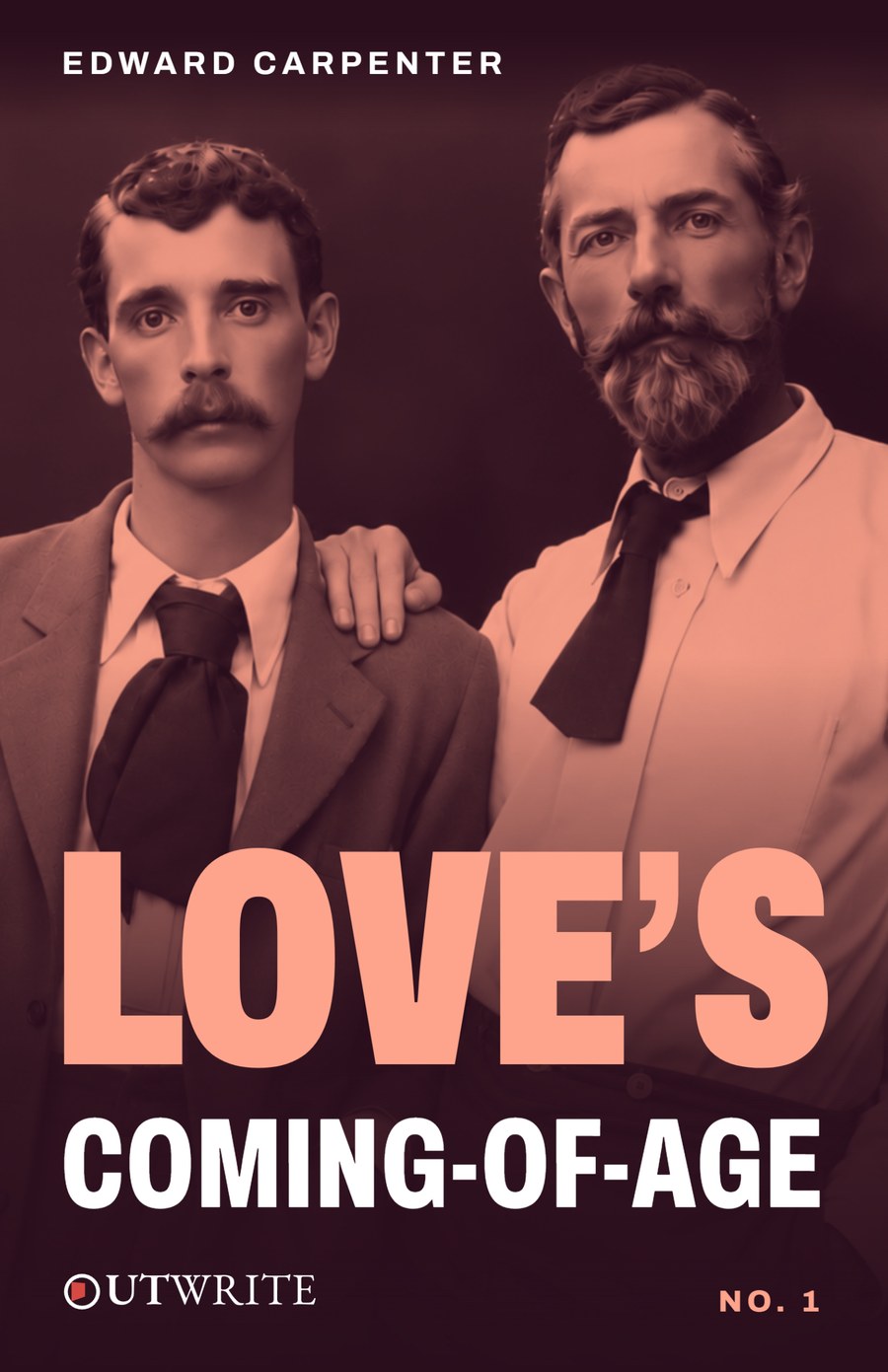
Love’s Coming-of-Age (1896) is Carpenter’s open, tender case for loving freely, and the book whose candor about same-sex love cost him his publisher.
- Author
- Edward Carpenter
- First published
- Manchester, 1896
- Editor
- Tomas Figueroa
- Length
- 234 pages
- Reading time
- About 5 hours
- Edition
- Modern Edition No. 1
Who reads this book
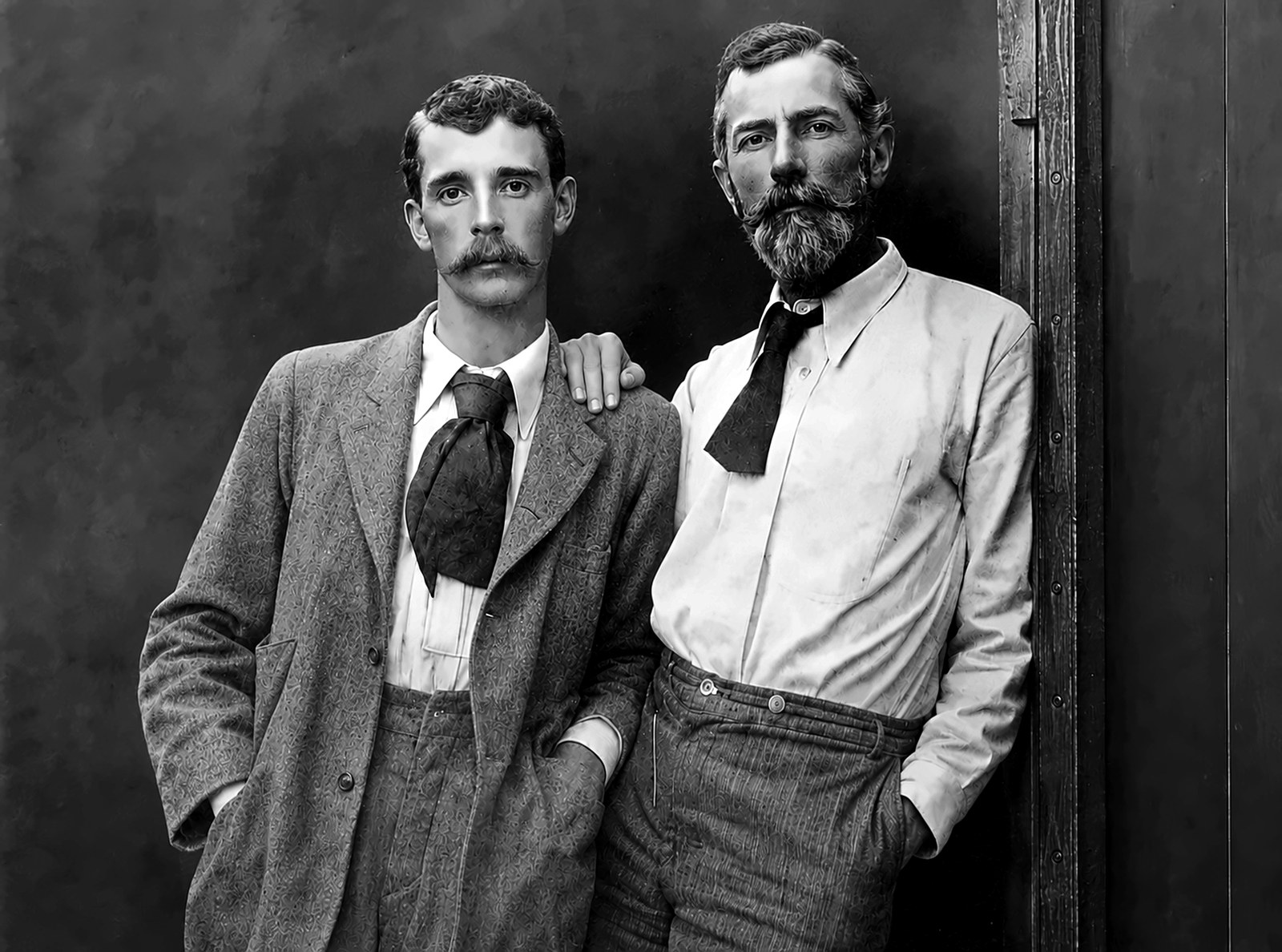
- Readers of E. M. Forster’s Maurice, which Forster began just after visiting Carpenter and Merrill in 1913
- Readers of Walt Whitman, whom Carpenter crossed the Atlantic to meet in 1877
- Anyone following the story of Oscar Wilde and the trials of 1895
- Readers of queer history who want the argument in the words of the people who made it
- Book clubs and reading groups
- Teachers and students of Victorian literature, gender, and sexuality
About the book
The essay every earlier edition left out
Love’s Coming-of-Age is Edward Carpenter’s argument, in plain Victorian prose, for reimagining how people love. Its most radical claim is that love between men, or between women, is neither sickness nor crime but part of the ordinary range of human feeling.
It nearly did not appear at all. Carpenter first wrote it as four pamphlets. The fourth, “Homogenic Love and Its Place in a Free Society,” was printed for private circulation only. Oscar Wilde was arrested in April 1895 and sentenced in May. In July, T. Fisher Unwin, who had contracted to publish the other three as a book, looked at that essay and cancelled. Carpenter offered the collection to other London houses without it, and every one refused. The book came out at last early in 1896, from the Labour Press, the small Manchester firm that had printed the pamphlets.
The essay never went back in. In 1906 Carpenter added a new and much milder chapter on the subject, “The Intermediate Sex.” No edition of Love’s Coming-of-Age, in his lifetime or since, has printed “Homogenic Love.” This one prints it as Chapter 7, where Carpenter placed the subject in 1906, and prints the 1906 chapter at the back, so the two can be read side by side.
“If we would have a living thing we must give that thing some degree of liberty—even though liberty bring with it risk.”
Edward Carpenter · “Marriage: A Retrospect”
About the author
Read the first pages
The Sex-Passion
Carpenter’s first chapter, page 27
The subject of Sex is difficult to deal with. There is no doubt a natural reticence connected with it. There is also a great deal of prudery. The passion occupies, without being spoken of, a large part of human thought; and words on the subject being so few and inadequate, everything that is said is liable to be misunderstood. Violent inferences are made and equivocations surmised, from the simplest remarks; qualified admissions of liberty are interpreted into recommendations of unbridled licence; and generally the perspective of literary expression is turned upside down.
There is in fact a vast deal of fetishism in the current treatment of the question. Nor can one altogether be surprised at this when one sees how important Sex is in the scheme of things, and how deeply it has been associated since the earliest times not only with man’s personal impulses but even with his religious sentiments and ceremonials.
Keep reading
Next to hunger it is doubtless the most primitive and imperative of our needs. But in modern civilised life Sex enters probably even more into consciousness than hunger. For the hunger-needs of the human race are in the later societies fairly well satisfied, but the sex-desires are strongly restrained, both by law and custom, from satisfaction—and so assert themselves all the more in thought.
To find the place of these desires, their utterance, their control, their personal import, their social import, is a tremendous problem to every youth and girl, man and woman.
There are a few of both sexes, doubtless, who hardly feel the passion—who have never been “in love,” and who experience no strong sexual appetite—but these are rare. Practically the passion is a matter of universal experience; and speaking broadly and generally we may say it is a matter on which it is quite desirable that every adult at some time or other should have actual experience. There may be exceptions; but, as said, the instinct lies so deep and is so universal, that for the understanding of life—of one’s own life, of that of others, and of human nature in general—as well as for the proper development of one’s own capacities, such experience is as a rule needed.
Chapter 1 runs to page 44. The book has nine chapters, with Carpenter’s notes and appendix.
The Modern Edition
What this edition includes
- Carpenter’s complete text, with his own notes and appendix
- “Homogenic Love and Its Place in a Free Society,” restored as Chapter 7Cut after the Wilde trials and missing from every earlier edition of the book
- “The Intermediate Sex,” the milder chapter Carpenter wrote in its place in 1906Printed at the back, so the two can be read side by side
- A new Introduction by Tomas FigueroaIt opens at Millthorpe in 1913, on the afternoon E. M. Forster came to visit
- A Note to the Reader and an Editor’s NoteWhat this edition changes, what it leaves alone, and which decisions are the editor’s rather than Carpenter’s
- Editorial notes throughout, each marked (Ed.)
- A chronology and a sources page
Contents
- A Note to the Readerv
- Introduction1
- Editor’s Note23
- Love’s Coming-of-Age
- The Sex-Passion27
- Man, the Ungrown45
- Woman, the Serf53
- Woman in Freedom67
- Marriage: A Retrospect81
- Marriage: A Forecast95
- Homogenic Love and Its Place in a Free Society113
- The Free Society153
- Some Remarks on the Early Star and Sex Worships165
- Notes171
- Appendix181
- Addendum: The Intermediate Sex197
- Editorial apparatus
- Chronology213
- Sources221
- About the Editor223
Edition details
- Paperback
- $13.99 · ISBN 979-8-9973184-0-6
- Ebook
- $4.99 · ISBN 979-8-9973184-1-3
- Library of Congress
- LCCN 2026920856
- Format
- 5.5 × 8.5 in · 234 pages
- Published
- September 2026 · New Haven
- Typeset in
- Source Serif 4 and Archivo
- Text
- Based on the first edition published by the Labour Press, Manchester, 1896.